Inside the Well Digging Theatre of Indian Corporates
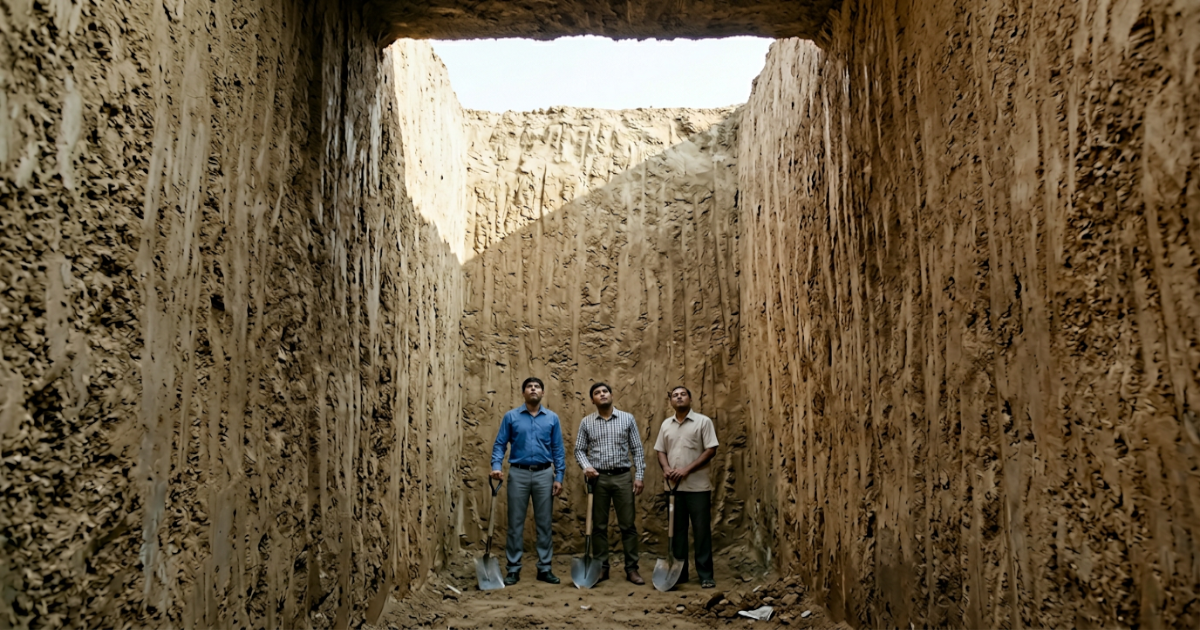
In many organizations, success is not measured by whether water is found. It is measured by how visibly people dig the well.
The harder the digging appears, the greater the perception of commitment. Whether the well is in the right place, whether the tools are appropriate, or whether the effort creates any meaningful outcome often becomes secondary.
Welcome to the Well Digging Theatre.
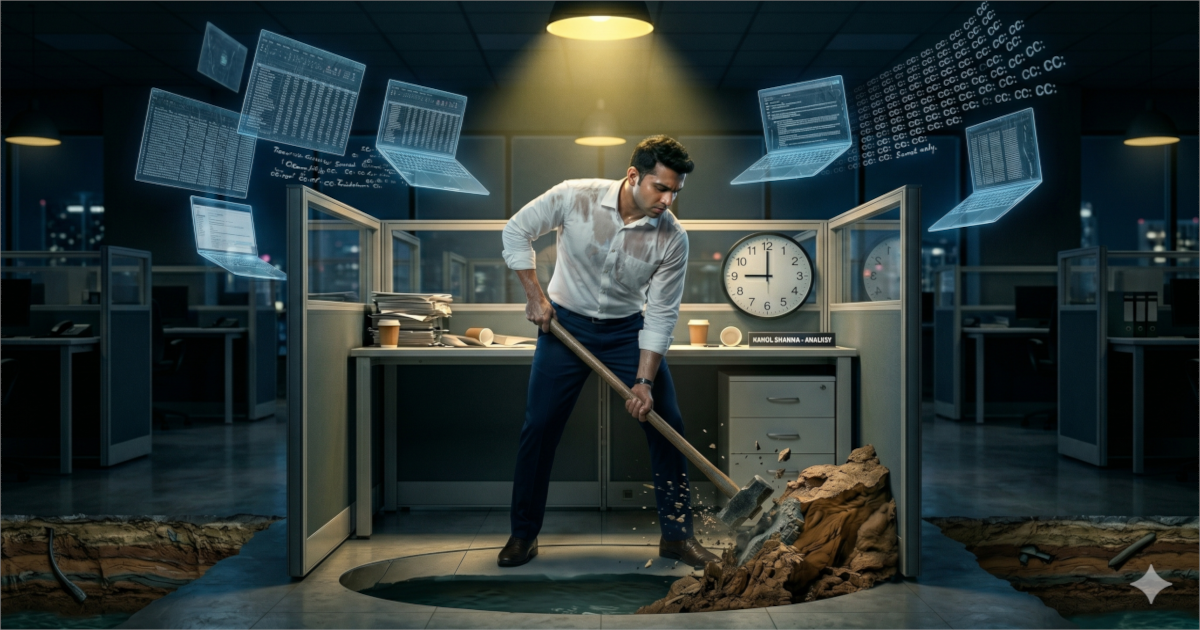
Consider a familiar scene in many corporate offices. As the official workday approaches its end, activity suddenly intensifies. Emails are sent with multiple stakeholders copied. Messages appear on team groups. Employees who were prepared to leave earlier remain at their desks, visibly engaged. The business itself has not changed in the last thirty minutes. The market has not shifted. Customer demand has not increased. Yet the pace of visible activity rises dramatically.
The reason is often cultural rather than operational. In many organizations, employees understand that commitment is measured not only through outcomes but through visible signals of dedication.
This is the Well-Digging Theatre of modern management: a corporate environment where the actual outcome of your work is secondary to the visibility of your struggle. In a fear-driven culture, you are expected to show the hierarchy that you are working your fingers to the bone to "dig the well," even if you are digging in a place with zero water, using broken tools, or covering up the same pit you dug yesterday just to look occupied.
The Performance Illusion
This phenomenon reflects what may be called the “Performance Illusion”—a workplace environment where visible effort receives greater recognition than meaningful contribution. In such environments, employees learn that success depends not only on solving problems but also on demonstrating that they are working hard to solve them. The result is a subtle shift in priorities. Attention moves from creating value to creating evidence of value creation.
The objective should be to find water. Yet in many organizations, greater importance is placed on showing everyone that one is digging. Whether the effort is producing meaningful results becomes secondary. Visibility becomes proof of commitment.
The Hidden Cost of Corporate Theatre
The cumulative impact of these behaviours is significant. Organizations become increasingly busy without necessarily becoming more productive.
Employees spend substantial amounts of time preparing presentations, attending meetings, managing perceptions, and documenting activities. Calendars become full, inboxes become crowded, and dashboards become increasingly sophisticated.
Yet leaders often find themselves asking a familiar question: Despite all this activity, why does progress feel slower than expected?
The answer lies in the distinction between activity and value creation. Activity is visible and easy to measure. Value creation is often less visible and requires deeper evaluation.
Over time, organizations naturally optimize for whatever receives the greatest attention.
From Measuring Activity to Measuring Outcomes
The challenge for modern leadership is therefore not simply to increase productivity but to redefine what productivity means.
Organizations must move beyond measuring visible effort and focus more rigorously on outcomes, learning, decision quality, and long-term impact. This does not require eliminating presentations, meetings, or reporting structures. Rather, it requires ensuring that these tools serve the work rather than become substitutes for it.
Leaders can begin by asking different questions:
- What changed because of this effort?
- What decision was improved?
- What customer problem was solved?
- What capability was built?
Instead of rewarding the most polished presentation, organizations can reward the clearest insight. Instead of celebrating constant responsiveness, they can encourage thoughtful execution.
Conclusion: Stop Rewarding the Mud, Reward the Water
The future competitiveness of organizations will depend increasingly on their ability to distinguish performance from performance theatre.
In an era where technology, data, and processes are becoming widely accessible, culture remains one of the few sustainable differentiators. Organizations that reward genuine contribution over visible effort will attract stronger talent, make better decisions, and innovate more effectively.
The greatest risk facing many organizations today is not a lack of effort. It is the possibility that they have become exceptionally good at performing productivity while losing sight of productivity itself.
True excellence is not measured by the amount of dust raised while digging.
It is measured by whether water is ultimately found.